
prefer_pattern() sets which pattern a bare pattern name resolves to,
taking priority over all other patterns with that name.
unprefer_pattern() removes such preferences.
conflicting_patterns() returns the available patterns whose bare name is shared
by more than one pattern (see register_pattern() for how bare names are resolved).
Using such a bare name throws an error unless a preference has been set.
Arguments
- pattern
A character vector. For
prefer_pattern()the qualified names"owner::name"of the preferred patterns whereowneris either the package that registered it ("gridpattern"for the builtin patterns) or"R_GlobalEnv"for patterns registered by the user e.g.c("gridpattern::stripe", "R_GlobalEnv::wave"). Can't contain more than one pattern with the same bare name. If length zero (e.g.character(0)orNULL) thenprefer_pattern()does nothing. Forunprefer_pattern()bare pattern names e.g."stripe"(removes any preference for that name) and/or qualified names (only removes the preference if it is for that pattern).
Value
prefer_pattern() and unprefer_pattern() invisibly return a character vector of the
qualified names of the previous preferences (for the bare names in pattern)
that existed (character(0) if there weren't any).
conflicting_patterns() returns (for just the conflicting patterns)
a data frame with columns
- name
The pattern name.
- owner
The package that registered the pattern or
"R_GlobalEnv"for the user.- kind
Either
"geometry"or"array".- source
One of
"builtin","register_pattern", or"options".- active
Whether the bare
namecurrently resolves to this pattern.
Details
prefer_pattern() and unprefer_pattern() are vectorized and return the previous preferences (if any)
so they may be used to temporarily change preferences:
old <- prefer_pattern(new)
# ... use patterns ...
unprefer_pattern(new)
prefer_pattern(old) # does nothing if `old` is empty
Preferences only last for the current R session.
Users may put prefer_pattern() calls in their .Rprofile (or scripts)
to make them persistent.
Packages should not call prefer_pattern() and should instead
refer to patterns by their qualified name "pkg::name".
Examples
create_pattern_polygon <- function(params, boundary_df, aspect_ratio, legend = FALSE) {
grid::polygonGrob(boundary_df$x, boundary_df$y, boundary_df$id,
gp = grid::gpar(fill = params$pattern_fill))
}
x_hex <- 0.5 + 0.5 * cos(seq(2 * pi / 4, by = 2 * pi / 6, length.out = 6))
y_hex <- 0.5 + 0.5 * sin(seq(2 * pi / 4, by = 2 * pi / 6, length.out = 6))
# don't clobber any pre-existing user "stripe" pattern
run_example <- !has_pattern("R_GlobalEnv::stripe")
if (run_example) {
# temporarily remove any pre-existing "stripe" preference
old <- unprefer_pattern("stripe")
register_pattern("stripe", create_pattern_polygon)
}
#> Pattern "stripe" conflicts with "gridpattern::stripe".
#> ℹ Use `prefer_pattern("R_GlobalEnv::stripe")` to use your pattern by default.
if (run_example) {
print(conflicting_patterns())
}
#> name owner kind source active
#> 1 stripe gridpattern geometry builtin FALSE
#> 2 stripe R_GlobalEnv geometry register_pattern FALSE
if (run_example) {
# bare "stripe" is now ambiguous
grid::grid.newpage()
try(grid.pattern("stripe", x_hex, y_hex))
}
#> Error : Pattern "stripe" registered by 2 owners.
#> Either pick the one you want with `::`:
#> • "R_GlobalEnv::stripe"
#> • "gridpattern::stripe"
#> Or declare a preference with `prefer_pattern()`:
#> • `prefer_pattern("R_GlobalEnv::stripe")`
#> • `prefer_pattern("gridpattern::stripe")`
if (run_example) {
# prefer the user's "stripe" pattern over the builtin "stripe" pattern
prefer_pattern("R_GlobalEnv::stripe")
grid::grid.newpage()
grid.pattern("stripe", x_hex, y_hex, fill = "blue")
}
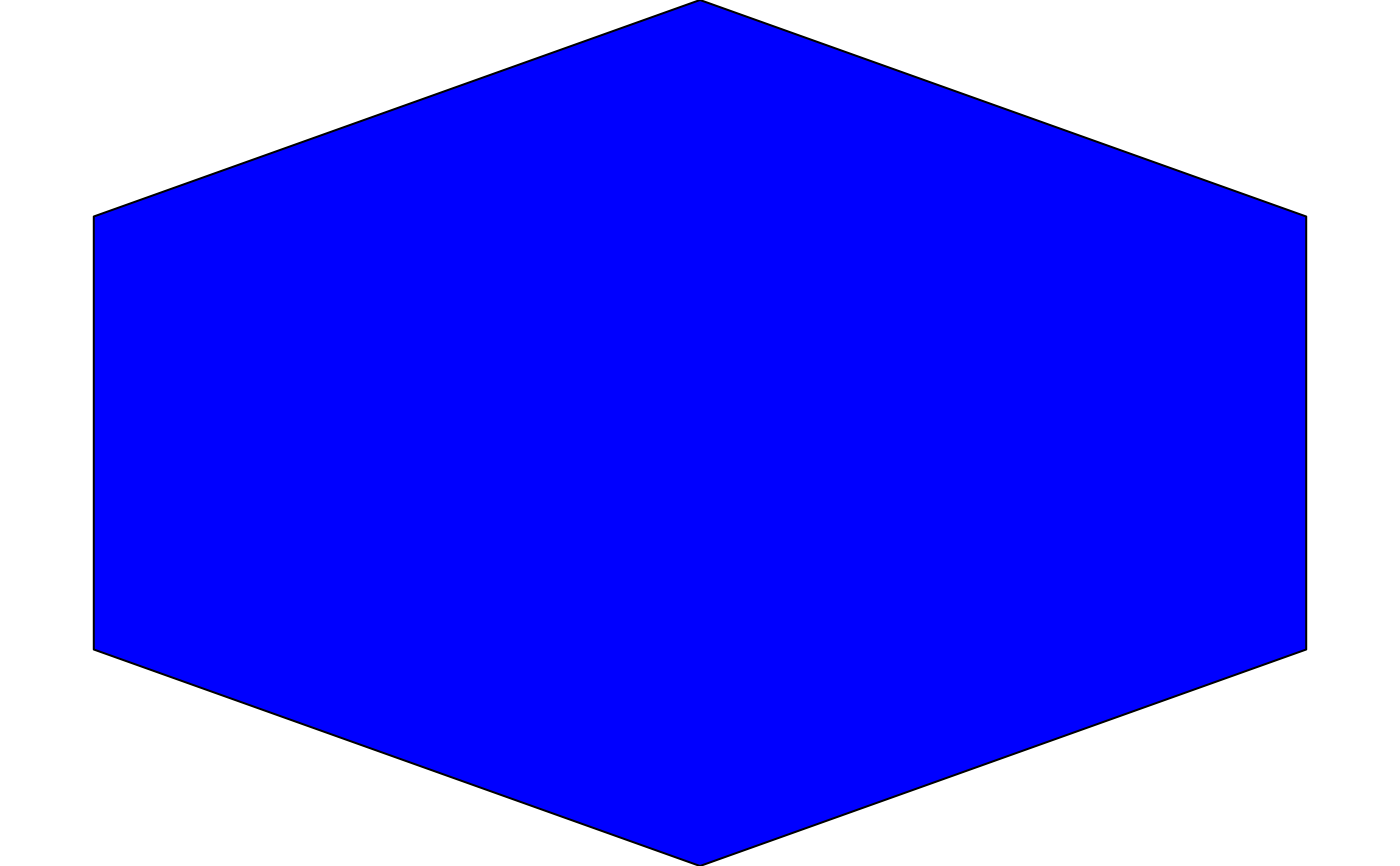 if (run_example) {
print(conflicting_patterns())
}
#> name owner kind source active
#> 1 stripe gridpattern geometry builtin FALSE
#> 2 stripe R_GlobalEnv geometry register_pattern TRUE
if (run_example) {
# remove the preference
unprefer_pattern("stripe")
# remove "R_GlobalEnv::stripe" (not "gridpattern::stripe")
unregister_pattern("stripe")
# restore any pre-existing preference
prefer_pattern(old)
}
if (run_example) {
print(conflicting_patterns())
}
#> name owner kind source active
#> 1 stripe gridpattern geometry builtin FALSE
#> 2 stripe R_GlobalEnv geometry register_pattern TRUE
if (run_example) {
# remove the preference
unprefer_pattern("stripe")
# remove "R_GlobalEnv::stripe" (not "gridpattern::stripe")
unregister_pattern("stripe")
# restore any pre-existing preference
prefer_pattern(old)
}