register_pattern() registers a pattern so it can be used by
grid.pattern() / patternGrob() (and {ggpattern}).
unregister_pattern() removes a pattern previously registered by the same owner
(as determined by env); it never removes patterns registered by other packages
or the builtin {gridpattern} patterns.
Arguments
- name
Pattern name. Must not contain
":".- fn
Pattern function. Its required signature depends on
kind:- geometry
function(params, boundary_df, aspect_ratio, legend)returning a grid grob that lies within the boundary (e.g. clipped to it).paramsis a list of (prefixed) pattern parameters e.g.params$pattern_fill,boundary_dfis a data frame withx,y, andidcolumns describing the boundary polygon(s) in “npc” coordinates,aspect_ratiois the (best guess) aspect ratio of the viewport, andlegendis whether the pattern is being drawn in a{ggpattern}legend key.- array
function(width, height, params, legend)returning a 3D array of RGBA values (all values in the range [0, 1]) which{gridpattern}will mask to the boundary.widthandheightare the dimensions (in pixels) of the boundary's bounding box andparamsandlegendare as for geometry patterns.
See the “Developing Patterns” vignette
vignette("developing-patterns", package = "gridpattern")for more details and examples.- kind
Either
"geometry"or"array".- defaults
A named list of pattern-specific default parameter values (without the
pattern_prefix) e.g.list(type = "running", spacing = 0.1). Values may be constants or functions of the formfunction(params, gp)whereparamsis the list of (prefixed) pattern parameters filled in so far andgpis the grob'sgrid::gpar()object e.g.list(amplitude = function(params, gp) 0.5 * params$pattern_spacing). These replace the generic defaults for parameters that weren't supplied. Note{ggpattern}supplies its own (generic) defaults for most of its pattern aesthetics so these will mainly be used withgrid.pattern()/patternGrob().- env
The environment used to determine the “owner” of the pattern. If writing a function that registers patterns on behalf of its caller add an
env = rlang::caller_env()argument to that function and pass it on.
Value
register_pattern() and unregister_pattern() invisibly return the
previous registration (a list) or NULL if there wasn't one.
Details
Each pattern is “owned” by either the package that registered it
or by the user (if registered from the global environment e.g. in a script or at the console).
Patterns may always be referred to by their qualified name
"owner::name" e.g. "gridpattern::stripe", "pkg::name", or "R_GlobalEnv::name".
A bare pattern name like "stripe" is resolved as follows:
If the user has set a preference with
prefer_pattern()then the preferred pattern.If exactly one owner (the user,
{gridpattern}, or a loaded package) has a pattern with that name then that pattern. Patterns set by the user with the (legacy)ggpattern_geometry_funcs/ggpattern_array_funcsoptions are owned by the user. If the user has more than one pattern with that name (fromregister_pattern()and/or the options) an error is thrown asking them to remove all but one of them (since they share the same qualified name"R_GlobalEnv::name"a preference can't choose between them).Otherwise there is a conflict and an error is thrown, asking for either a qualified
"owner::name"or aprefer_pattern()preference. In particular, a user pattern with the same name as a builtin{gridpattern}pattern does not mask the builtin pattern without a preference.
conflicting_patterns() lists the patterns whose bare names are shared by more than one pattern.
patternGrob() resolves the pattern name when the grob is created (if the pattern is registered)
so redrawing the grob (e.g. when resizing an interactive graphics device)
still works even if the pattern is later unregistered or conflicted
(e.g. by local_pattern() going out of scope).
Changing the grob's pattern with grid::editGrob() resolves the new pattern name when drawn.
Packages should register their patterns in their .onLoad() function.
We recommend wrapping the registration in rlang::on_package_load()
so the pattern is registered whenever {gridpattern} is loaded
(allowing {gridpattern} to be in Suggests and surviving {gridpattern} being reloaded).
Since a Suggests version requirement isn't enforced when installing or loading packages,
also check that the installed {gridpattern} has register_pattern()
(and otherwise fall back to setting the legacy ggpattern_geometry_funcs option):
.onLoad <- function(libname, pkgname) {
  rlang::on_package_load("gridpattern", {
    if (exists("register_pattern", envir = asNamespace("gridpattern"), inherits = FALSE)) {
      gridpattern::register_pattern("brick", create_pattern_brick)
    } else {
      funcs <- getOption("ggpattern_geometry_funcs", list())
      funcs[["brick"]] <- create_pattern_brick
      options(ggpattern_geometry_funcs = funcs)
    }
  })
}
Package code that relies on a particular pattern should use its qualified name
(e.g. "gridpattern::stripe") since other packages (or users) may register patterns
with the same bare name.
See also
registered_patterns() and has_pattern() to list available patterns.
local_pattern() to temporarily register a pattern.
prefer_pattern() and conflicting_patterns() to resolve pattern name conflicts.
Examples
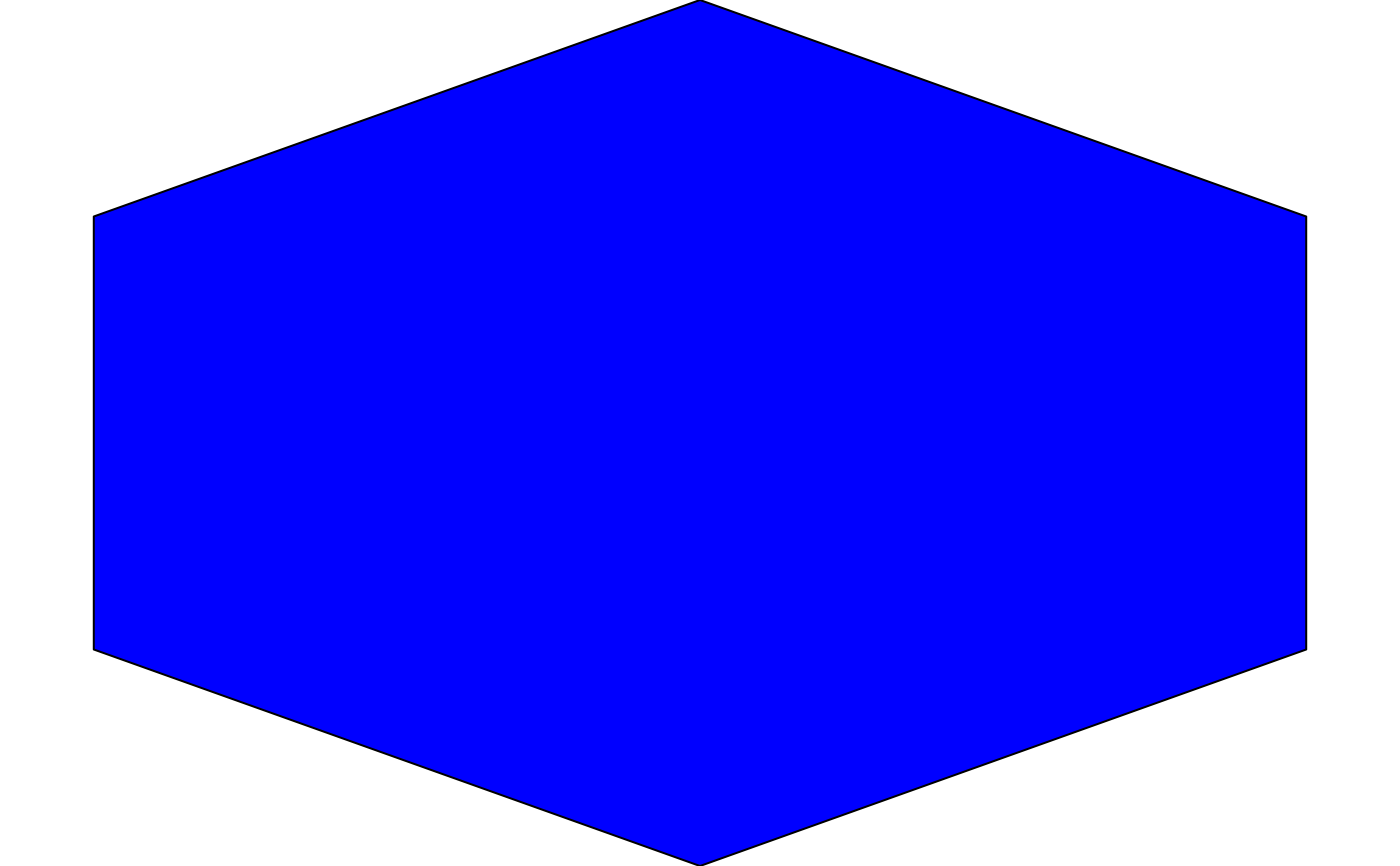
create_pattern_polygon <- function(params, boundary_df, aspect_ratio, legend = FALSE) {
  grid::polygonGrob(boundary_df$x, boundary_df$y, boundary_df$id,
                    gp = grid::gpar(fill = params$pattern_fill))
}
x_hex <- 0.5 + 0.5 * cos(seq(2 * pi / 4, by = 2 * pi / 6, length.out = 6))
y_hex <- 0.5 + 0.5 * sin(seq(2 * pi / 4, by = 2 * pi / 6, length.out = 6))
# don't clobber any pre-existing "polygon" pattern
if (!has_pattern("polygon")) {
  register_pattern("polygon", create_pattern_polygon)
  grid::grid.newpage()
  grid.pattern("polygon", x_hex, y_hex, fill = "blue")
  unregister_pattern("polygon")
}